Provocative? Yes, but perhaps necessary from a workplace safety perspective.
Seit Jahrzehnten wissen wir, dass Müdigkeit Aufmerksamkeit, Reaktionsvermögen und Entscheidungsqualität beeinträchtigt. Die wissenschaftluche Faktenlage ist erdrückend, und wird nicht angezweifelt. Gleichzeitig wissen wir, dass Millionen Menschen, in Deutschland über 70% an Werktagen, ihren Schlaf regelmäßig durch einen Wecker beenden müssen, oft lange bevor ihr Organismus den Schlaf natürlicherweise beendet hätte. Man will ausgeschlafene Mitarbeitende, läßt sie aber nicht ausschlafen.
The question of what safety implications these findings may have for the scheduling and temporal organization of safety-critical activities has received little systematic consideration within occupational health and safety to date. This is not due to a lack of available evidence, but rather because these individual insights are rarely integrated into an overarching conclusion — or perhaps because the relevance of this perspective has simply not yet been recognized.
Investigations into major disasters such as the Exxon Valdez oil spill, as well as numerous analyses from aviation, medicine, and other high-risk industries, have shown that fatigue, reduced vigilance, and impaired decision-making can represent critical safety factors. The role of human factors in the context of night work, organizational structures, and decision-making processes has also been extensively examined in relation to the Chernobyl disaster.
So, there is one surprisingly simple question that we hardly ever ask even today:
Can the way we organize work schedules itself be a safety-related risk factor?
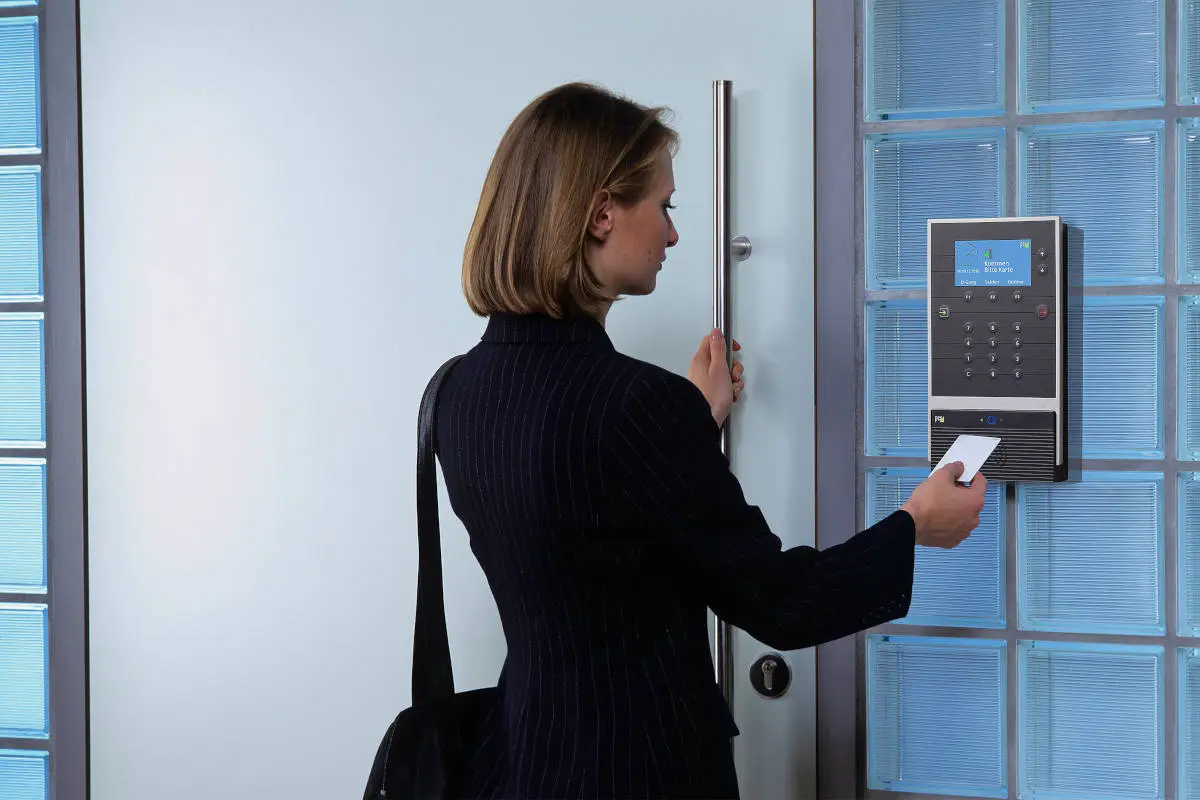
Safety starts at the time clock
Modern companies invest substantial resources in occupational health and safety. Machinery is equipped with safety measures, ergonomic workplaces are designed, psychosocial risks are assessed, and organizational hazards are systematically evaluated. These efforts are essential and represent important progress. However, most of these measures address risks only once a hazard has already become apparent.
What if a significant part of the risk arises much earlier — at the very point when working schedules are designed? After all, work does not begin at the workplace alone. It begins with an individual whose physiological state is already shaped by biological factors before the work itself starts.
The body has no internal clock
We organize our lives around clock time. The human organism, by contrast, follows biological rhythms — it does not recognize clock time as a biological reference. Hormones are not released at 7:00 a.m. because the clock says so. Alertness does not increase because the calendar marks the beginning of a working day. Body temperature, cortisol, melatonin, metabolism, sleep pressure, and cognitive performance are regulated by an internal biological timing system. This system is synchronized by external zeitgebers, such as daylight and the spectral composition of sunlight, but it is not governed by social schedules or clock time. At its core, this regulation is predominantly genetically influenced and therefore differs between individuals. This is the fundamental reason why people respond differently to the same working hours.
While one person may already be working with a high level of concentration in the morning, another may still be in a phase of reduced physiological performance — for example, due to being awakened from sleep at a biologically unfavorable time. Both arrive at the workplace on time. Both perform the same task. Yet their biological conditions and levels of readiness may differ significantly.
What we’ve known for a long time but still rarely connect
Chronobiology has described these relationships for many years. At the same time, occupational and safety research has demonstrated that fatigue, reduced vigilance, and impaired decision-making increase the likelihood of errors and accidents. These two bodies of knowledge exist side by side. However, they are rarely integrated into a consistent overall perspective. The fundamental question, therefore, is not whether fatigue is a safety risk. We already know that.
The question is rather:
What role do working hours themselves play in causing this fatigue, and what responsibilities does this entail for companies?
A taboo, or just a blind spot in the risk assessment?
Under occupational health and safety legislation, companies are required to systematically identify and assess hazards and implement appropriate preventive measures. Relevant factors include, among others, ergonomic demands, noise exposure, hazardous substances, psychosocial stressors, and organizational working conditions. By contrast, the individual chronobiological suitability of working hours has, to date, received very limited attention.
This may be precisely where one of the underestimated causes of many well-known consequences lies: errors, accidents, reduced performance, chronic fatigue, rising healthcare costs, and long-term health impacts. Is this a known issue that has simply not received sufficient attention — or does it represent a genuine blind spot in current occupational health and safety practices?
The crucial question, therefore, is not whether working hours need to be organized—they do—but whether they should also be evaluated from a chronobiological perspective in the future.

Why We Talk So Little About This in Occupational Safety
Interestingly, this is not because scientific knowledge is lacking. Rather, our current working time models originate from an era in which standardization was considered more important than individualization. Today, individualization is still largely limited to flexible scheduling arrangements. The industrial organization of work was designed around machines, production processes, and efficiency — not around the biological diversity of human beings.
In addition, chronobiology, occupational medicine, occupational health and safety, and human resource management have developed their respective perspectives and research questions largely independently of one another over decades. As a result, true interdisciplinary integration has not emerged. An important aspect has fallen through the cracks.
The Economic Dimension
The consequences affect not only the health and safety of individuals, but also organizations and entire economies. The RAND Europe study Why Sleep Matters estimates the economic costs associated with sleep-related performance and concentration deficits in Germany alone at more than €60 billion per year. In political and economic terms, this would represent the country’s second-largest federal budget, roughly comparable in scale to Germany’s defense budget.
Internal studies conducted in corporate settings further indicate that chronobiologically unsuitable working hours can result in economic losses of several thousand euros per employee per year. These costs arise, among other factors, from reduced productivity, impaired decision-making, increased error rates, and safety-critical incidents.
This suddenly turns a biological question into a management issue.
ChronoWorking Goes Beyond Health
In recent years, the concept of ChronoWorking has gained increasing attention. In most cases, the focus has been on the question of how working hours can be better aligned with individual chronotypes in order to improve health, motivation, and performance.
I consider this approach both valid and important, and it is one that we also pursue on several levels, for example through our chronobiology training programs and seminars. From my perspective, however, ChronoWorking represents more than just one side of the chronobiological equation. If chronobiological misalignment can influence alertness, reaction capacity, and the quality of decision-making, then the issue is no longer solely about performance in terms of efficiency. It also becomes a matter of occupational safety.
If the vehicle stops running
With the mandatory introduction of fatigue and attention warning systems in new vehicles, European legislation explicitly recognizes that human performance is a safety-relevant factor. Modern driver assistance systems continuously monitor drivers and issue warnings when signs of declining attention are detected. In more advanced systems, vehicles can even initiate a controlled safety maneuver autonomously if the driver fails to respond.
This development illustrates a fundamental paradigm shift: safety systems are increasingly responding to biologically driven reductions in human performance. However, this raises a broader question: Should prevention not begin much earlier — namely at the point where such conditions arise?
Chronobiological Safety Compliance aims to contribute to this discussion within the field of occupational safety. The objective is not to replace existing safety systems, but rather to complement them with a preventive perspective: reducing safety risks as early as possible through the design of working schedules and workforce deployment strategies, before technical warning systems need to intervene.
My Position Paper
With this position paper, “Chronobiological Safety Compliance – A Position Paper on the Classification of Chronobiological Aspects within the Framework of Hazard Assessment under the German Occupational Health and Safety Act”, I do not intend to provide immediate and universal solutions, despite the experience gained and the increasingly clear trends emerging from our pilot projects as well as the broader body of research. Instead, the aim is to initiate a discussion.
A discussion between chronobiology, occupational science, safety professionals, human resource managers, companies, statutory accident insurance institutions, and policymakers. Because it is possible that, for decades, we have focused primarily on the consequences of working hours that are misaligned with human biology, without sufficiently addressing their underlying causes.
The foundations are now available, and the evidence is increasingly clear. When it comes to occupational safety, continued hesitation may have consequences.
Can Working Hours Actually Kill? An Invitation to Discussion
Perhaps it will ultimately become clear that my hypothesis goes too far. But it may also become evident that a systemic risk factor is currently being overlooked, despite all the necessary scientific building blocks already being available. This is precisely why this discussion should take place within the field of occupational safety.
I have shared my position paper with statutory accident insurance institutions, professional media, and organizations involved in occupational safety. The first positive responses arrived surprisingly quickly — even during the holiday season.
If you would like to explore the full argumentation, the scientific foundations, and the legal considerations in detail, I warmly invite you to download the position paper from my website. It is freely available, without tracking and without requiring an email address, because my intention is simply to initiate a discussion.
Progress does not begin with an answer, but with a question that no one has asked yet.
Postscript
At the time this position paper was developed, I was not aware of any activities by relevant professional committees or expert bodies in this field, although this does not necessarily mean that none exist. However, the initial responses appear to confirm that this topic has not yet been a central focus of discussion.
After 24 years of working in chronobiology, I would therefore like to emphasize once again that my intention is not criticism, but dialogue. I welcome an open and constructive discussion and would be pleased to contribute my expertise wherever it can support this process.